





Hidden Water Leaks in Dubai Apartments | Signs, Risks and Detection
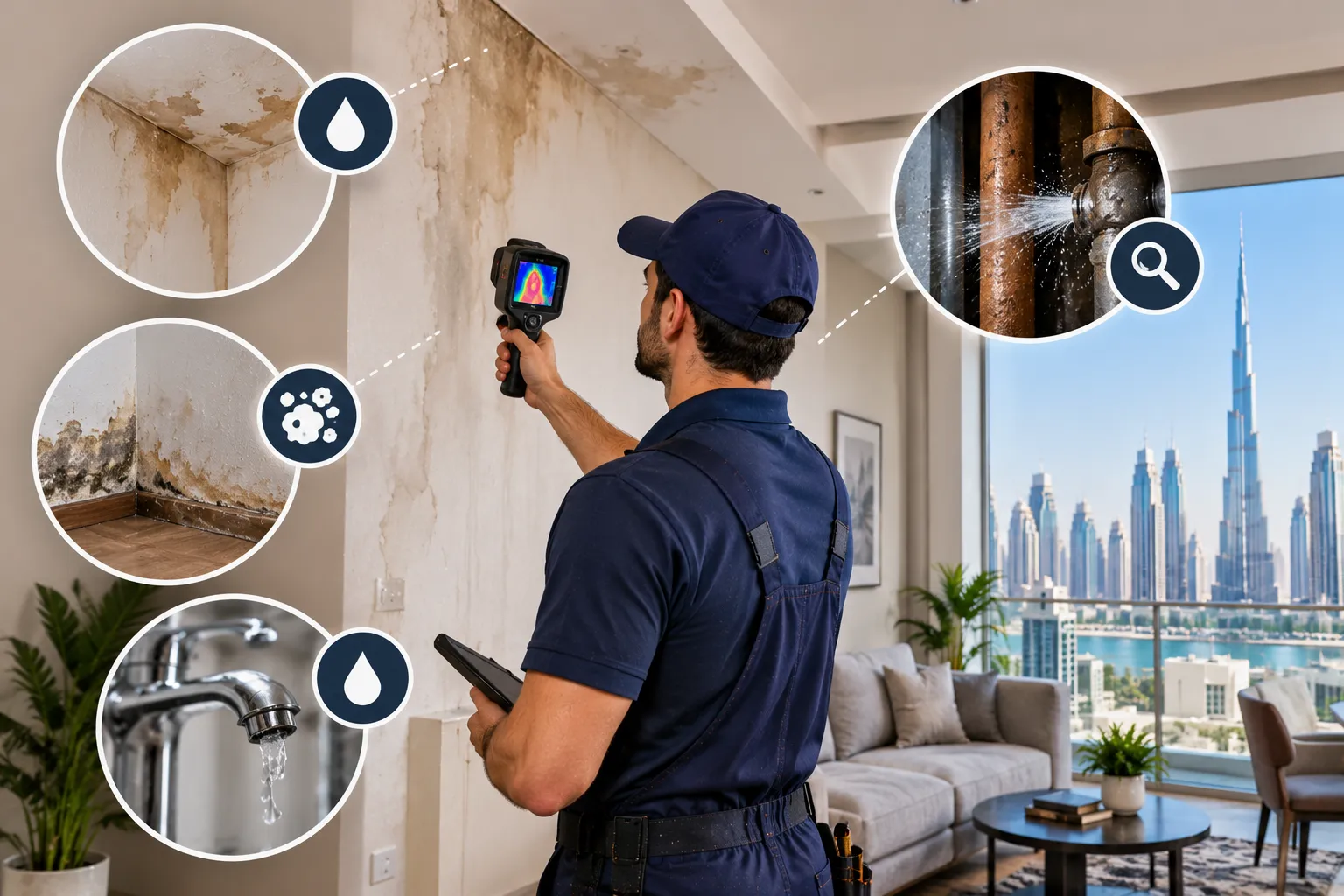
Hidden water leaks in a Dubai apartment can remain unnoticed for days or even weeks before visible damage appears. Water may travel behind walls, under flooring, around bathrooms, or through ceilings before you notice a damp patch, peeling paint, unusual smell, or water appearing in the apartment below.
Finding the source early can help reduce water waste and prevent further property damage. Dubai Electricity and Water Authority (DEWA) specifically recommends regularly checking internal water connections, with bathrooms, kitchens, water heaters, tanks, and other plumbing areas among the places where leaks can occur.
What Is a Hidden Water Leak?
A hidden water leak is a plumbing leak that cannot be easily seen because the damaged pipe or connection is located behind a wall, beneath a floor, inside a ceiling, or in another concealed area. Unlike a leaking tap, a concealed pipe can continue losing water without producing an obvious puddle.
A hidden leak may show as a damp wall, stained ceiling, damaged paint, musty smell, or unusually high water use. In apartments, water can travel away from the leak, so visible damage may not be near the actual source.
Signs of a Hidden Water Leak in a Apartment
Knowing the warning signs can help you identify a potential leak before it becomes a major plumbing problem.
1. Damp or Discoloured Walls
Brown, yellow, or dark patches on walls can indicate moisture behind the surface. Fresh paint that repeatedly becomes damp or starts bubbling may also suggest an ongoing water problem.
2. Water Stains on the Ceiling
Ceiling stains are particularly important in apartments. Water appearing on your ceiling may indicate a leak from plumbing above, a bathroom, a water heater, or another nearby source.
However, the location of the stain does not necessarily identify the exact source because water can travel through building materials.
3. Peeling Paint or Bubbling Walls
Moisture trapped behind paint can cause bubbling, blistering, cracking, or peeling. If the same area repeatedly develops damage after repainting, the underlying moisture source should be investigated.
4. Musty or Damp Smells
A persistent damp or musty smell without an obvious source can be another warning sign. It may indicate moisture accumulating behind walls, under flooring, or around concealed plumbing.
5. Unexplained Increase in Water Usage
A sudden increase in water consumption can be an important clue. DEWA’s High Water Usage Alert can notify customers when smart-meter data identifies unusually high consumption that may indicate an internal leak.
DEWA also recommends checking water bills and smart-meter information for unusual consumption patterns.
6. Water Appearing Around Fixtures
Check under sinks, around toilets, near washing machines, water heaters, and bathroom fittings. DEWA identifies bathrooms, kitchens, water heaters, and other internal connections as areas where leaks may occur.
Can a Leak in Your Apartment Damage the Flat Below?
Yes. Water from a leaking pipe, bathroom fitting, shower area, washing machine connection, or other plumbing component can travel through floors and ceilings and eventually appear in the apartment below.
The visible damage in the lower apartment may include ceiling stains, damp patches, peeling paint, dripping water, or damaged plaster. But the appearance of water downstairs does not automatically prove that the leak originated directly above that exact spot.
Water can travel horizontally or along structural and building-service pathways before becoming visible.
What Should You Do If Water Appears in the Flat Below?
If your neighbour reports water coming through their ceiling, check your bathroom, kitchen, water heater, toilets, washing machine connections, and visible pipes for leaks. If you find an active leak, safely shut off the water supply if possible.
Contact building management and arrange a professional inspection. A qualified Dubai plumber can locate the source and recommend the right repair.
Fast Plumbing Help in Dubai
Call or WhatsApp today for a clear, fixed-price quote and same-day plumbing service across Dubai.
How Are Hidden Water Leaks Found?
Finding a concealed leak is different from repairing a visible leaking tap. The plumber needs to determine where the water is coming from before opening walls, floors, or ceilings.
Visual Inspection
A professional plumber first checks accessible fixtures, pipes, valves, bathrooms, kitchens, water heaters, and other likely sources. This initial inspection can sometimes identify the problem without specialist equipment.
Water Meter and Consumption Checks
Water consumption data can provide useful evidence of a possible internal leak. DEWA’s High Water Usage Alert is designed to identify unusual increases in consumption through smart meters.
Thermal Leak Detection
Thermal imaging can help identify temperature differences associated with water movement in certain situations. It can be useful when investigating concealed plumbing without immediately removing large sections of a wall or floor.
Acoustic Leak Detection
Acoustic equipment can help detect the sound produced by water escaping from pressurised pipes. This can be particularly useful when the leak is concealed and there is little visible evidence.
The appropriate detection method depends on the plumbing system, building construction, leak type, and location.
Why You Should Not Ignore a Hidden Water Leak
A concealed leak can cause ongoing water damage even when it is not immediately visible. Over time, water may damage walls, ceilings, flooring, cabinets, and other building materials, with the risk of affecting neighbouring apartments.
DEWA advises customers to identify and repair internal leaks promptly to reduce water waste and property damage. Early inspection can also help determine whether the problem is inside your property or comes from another part of building.
Is the Leak Inside the Apartment or From the Building?
In Dubai apartments, not every water problem comes from your unit’s plumbing. DEWA states that customers are responsible for internal water connections after the meter, while issues with the DEWA network are handled by technical services.
If you are unsure whether the issue is inside your apartment, in common building services, or with the external network, contact building management for guidance and arrange an inspection. For DEWA technical issues, customers can use Smart Response, the DEWA website or app, Dubai Now, or call 991.
What to Do When You Suspect a Hidden Leak
If you suspect a concealed water leak in your Dubai apartment, take these steps:
Avoid drilling, cutting walls, or removing tiles simply to search for the leak. Professional detection can help locate the likely source before unnecessary damage is caused.
How PlumbDubai.com Helps Find Hidden Leaks
At PlumbDubai.com, our Dubai plumber team provides professional leak detection and repair for apartments, villas, and commercial properties across Dubai. We inspect visible plumbing and investigate signs of concealed leaks behind walls, under floors, and in hard-to-reach areas using suitable detection methods.
Once the leak source is identified, we explain the recommended repair and provide clear pricing before work begins. For apartment leaks affecting neighbouring properties, early professional inspection can help locate the source and prevent further water damage.
Frequently Asked Questions
What are the signs of a hidden water leak in an apartment?
Common signs include damp walls, ceiling stains, peeling paint, musty smells, unexplained water usage increases, and moisture around plumbing fixtures.
How can a plumber find a leak behind a wall?
A plumber may use visual inspection, water consumption checks, thermal imaging, acoustic detection, or other appropriate methods depending on the suspected leak.
Can a water leak from my apartment damage the flat below?
Yes. Water can travel through floors and building structures and may eventually appear as stains, dampness, or dripping water in the apartment below.