





Common Dishwasher Installation Problems and How to Avoid Them in Dubai
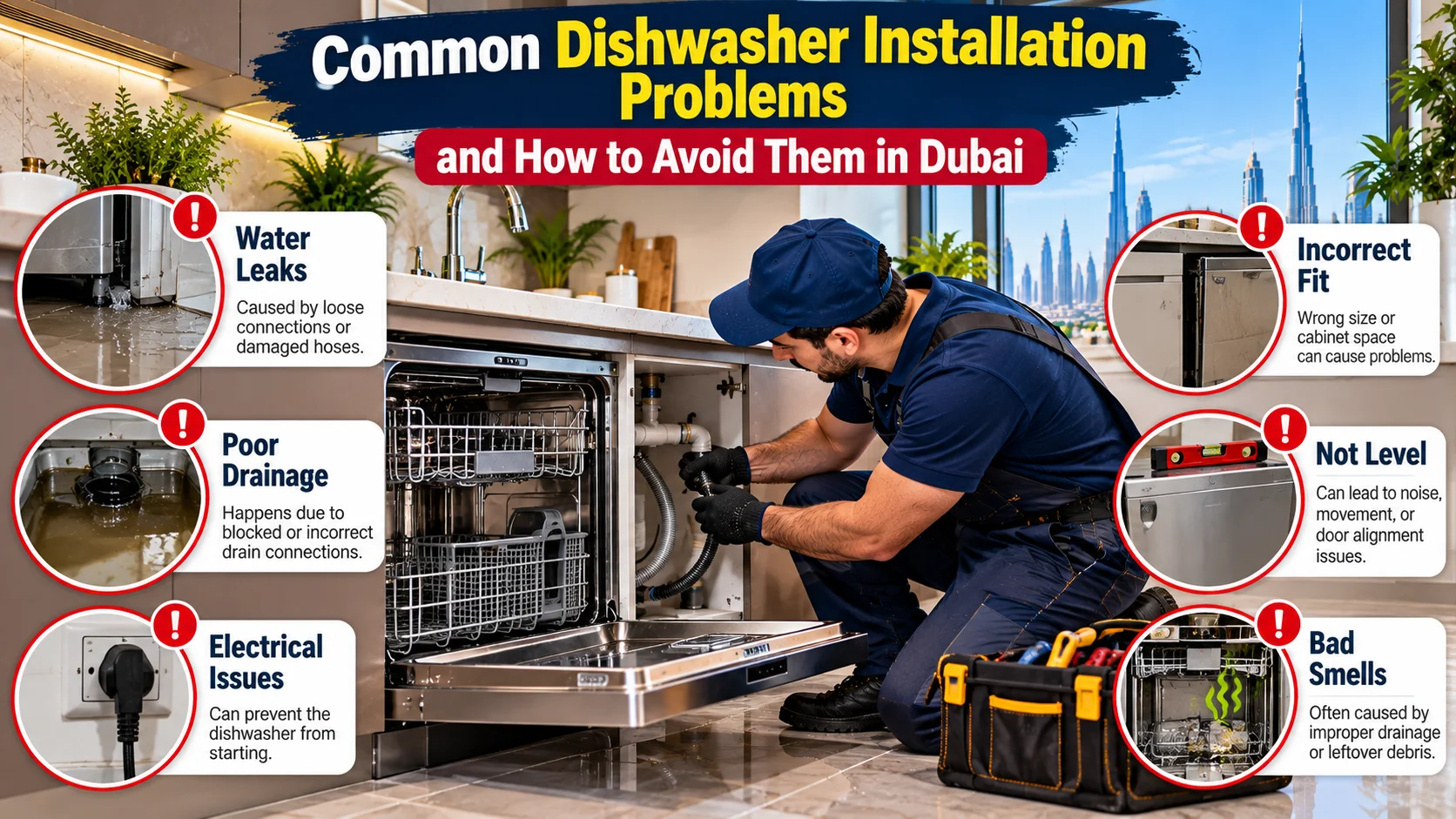
A dishwasher is designed to make kitchen cleaning easier, but installation problems can stop it from working properly. Water leaks, poor drainage, loose connections, and incorrect fitting are some issues that may appear when an appliance is installed incorrectly.
For homeowners and tenants in Dubai, these problems can be frustrating, especially when a new dishwasher has just been purchased. Some installation issues can also damage kitchen cabinets or flooring if they are not identified early.
The good news is that many problems can be avoided by preparing the kitchen, checking the appliance instructions, and making sure the installation is completed correctly. This guide explains common dishwasher installation problems, their possible causes, and the steps that can help prevent them.
Water Leaking from the Dishwasher
Water leakage is one of the most common problems that may occur after dishwasher installation. It can happen when an inlet hose is loose, a drain connection is not secure, or a fitting is damaged.
Sometimes, a leak may come from the kitchen plumbing rather than the dishwasher itself. This is why the source should be checked before any repair is attempted.
To reduce the risk of leakage, the installer should use compatible fittings and secure all connections according to the manufacturer’s instructions. The hoses should not be twisted, stretched, or trapped behind the appliance.
After installation, check the area around the dishwasher during a test cycle. If you notice water on the floor or inside a cabinet, stop the appliance and shut off the water supply if it is safe to do so. Arrange an inspection before using it again.
The Dishwasher Does Not Drain Properly
A dishwasher must remove dirty water at the end of a wash cycle. If water remains inside the appliance, the drain hose may be incorrectly positioned, blocked, or connected to unsuitable plumbing.
A drainage problem may also be caused by a blocked filter or another appliance fault, so installation is not always the only possible cause.
During installation, the drain hose should be routed according to the manufacturer’s instructions. It should not be crushed behind the appliance or bent sharply. The installer should also check that the drain connection is suitable for the model.
If the dishwasher does not drain after installation, consult the user manual and check for any visible hose problems without dismantling electrical or plumbing connections. If the issue continues, contact a qualified technician.
Incorrect Electrical Connections
A dishwasher may fail to start if it is not receiving the correct electrical supply. Incorrect wiring, an unsuitable socket, or a problem with the circuit can create operational and safety risks.
Before installation, check the dishwasher’s voltage, power requirements, and connection instructions. The electrical supply must be suitable for the appliance and the kitchen environment.
Do not use damaged cables or unsuitable extension leads to make the appliance work. If the socket or wiring needs modification, contact a qualified electrician who can follow applicable requirements in Dubai.
If the dishwasher trips a circuit breaker, produces a burning smell, or shows signs of electrical damage, stop using it. Do not repeatedly reset the breaker or attempt an improvised repair.
The Dishwasher Does Not Fit the Cabinet Space
A dishwasher that is too large for the available space can be difficult to install. The appliance may not slide into position, the door may hit nearby cabinets, or the hoses may become trapped behind it.
These issues are particularly important with built-in dishwashers because the appliance must fit within a planned cabinet opening.
Before buying a dishwasher, measure the width, height, and depth of the space. Check the product dimensions and the additional clearances stated in the installation manual. Also consider the location of the water supply, drain connection, and power supply.
Do not force the appliance into a tight opening. This can damage cabinets, hoses, or the dishwasher. If the space is unsuitable, ask an installer whether adjustments are possible before making changes to the kitchen.
The Dishwasher Is Not Level
Correct levelling helps the dishwasher remain stable and allows the door to operate as intended. If the appliance is uneven, it may move during use, sit poorly under the counter, or have door alignment problems.
The installer should use the dishwasher’s adjustable feet, where available, to position it according to the manufacturer’s instructions. The appliance should also be secured correctly if the model requires it.
After installation, open and close the door carefully to check that it moves freely. Make sure nearby drawers and cabinet doors do not interfere with it.
Avoid trying to level a built-in appliance by pulling it out or adjusting parts without understanding how it is secured. If the dishwasher moves or appears unstable, contact the installer to check the fitting.
Bad Smells After Installation
Unpleasant smells may develop when dirty water remains in the drainage system or when the dishwasher has not been cleaned properly. An unsuitable drain connection may also contribute to the problem.
The drain hose should be installed according to the manufacturer’s instructions and local plumbing requirements. The installer should check that the drainage arrangement is suitable for the kitchen plumbing.
After installation, follow the manual for cleaning the filter and running the first wash cycle. Use only dishwasher detergent and other products recommended for the appliance.
If the smell continues, or if dirty water flows back into the dishwasher, arrange a plumbing or appliance inspection. Do not pour random cleaning chemicals into the appliance because they may damage its parts.
The Dishwasher Makes Unusual Noises
Some operating sounds are normal, but loud knocking, strong vibration, or unusual rattling may indicate a problem.
Possible causes include an uneven appliance, contact with nearby cabinets, items inside the dishwasher touching the spray arms, or packaging material that was not removed before use.
During installation, the technician should remove all required transport materials and make sure the appliance is stable. The dishwasher should be positioned so that hoses and cables do not create unwanted contact or vibration.
If the noise begins during the first cycle, stop the dishwasher if the sound is severe or suggests a loose part. Check the manual for basic troubleshooting, and contact a technician if the problem continues.
How Professional Installation Can Help
Professional dishwasher installation services in Dubai can help prevent problems by checking the kitchen space, water supply, drainage, and electrical requirements before fitting the appliance.
An installer can also identify whether extra plumbing, electrical work, or cabinet adjustments may be needed. This helps you understand the likely cost before the job begins.
When booking a service, ask whether installation includes connection checks, levelling, a test cycle, and removal of the old appliance. Confirm whether extra parts or additional work cost more.
If you live in a rented apartment, check with your landlord before making changes to kitchen cabinets, plumbing, or electrical connections.
What to Check After Installation
Once the dishwasher has been installed, take a few minutes to check its operation.
- Make sure the door opens and closes smoothly.
- Look for leaks around visible water connections.
- Confirm that the appliance fills and drains correctly.
- Listen for unusual noises or strong vibration.
- Check for error messages on the display.
- Follow the manufacturer’s instructions for the first use.
If you notice a leak, electrical problem, or persistent error, stop using the appliance and arrange professional help.
Conclusion
Dishwasher installation problems can cause leaks, poor drainage, electrical concerns, and fitting issues. Many of these problems can be reduced by measuring the kitchen space, checking the required connections, and following the manufacturer’s instructions.
For Dubai homeowners and tenants, professional installation can be useful when plumbing, electrical work, or built-in cabinet fitting is involved. A proper test cycle also helps identify problems before the dishwasher is used regularly.
Taking these precautions can protect your kitchen, reduce avoidable repair costs, and help your dishwasher work as intended.