



Bathtub Resurfacing vs Replacement: Which Option Is Right for Your Dubai Home?
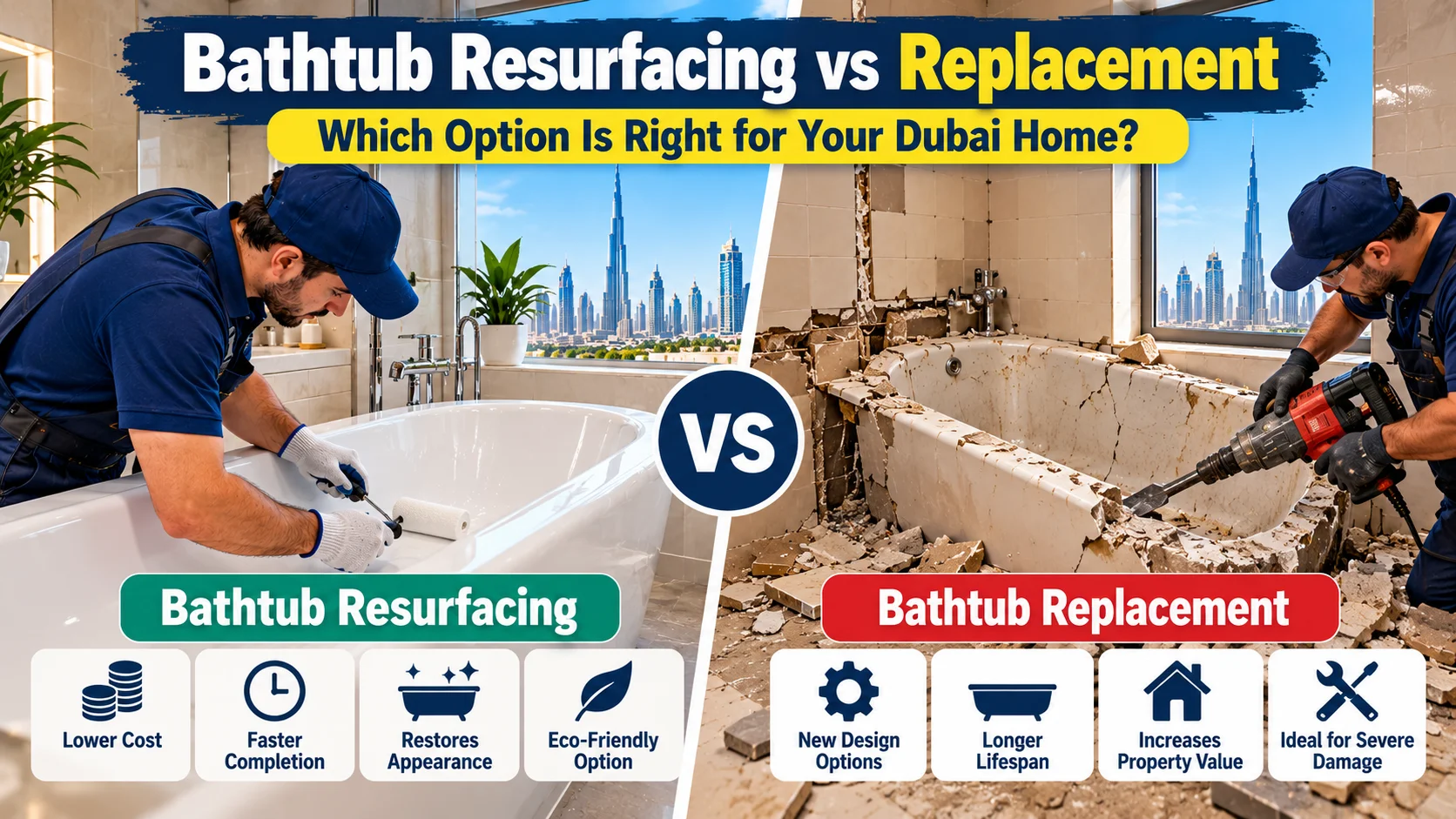
An old or damaged bathtub can affect the appearance and comfort of your bathroom. The surface may become dull, scratched, stained, or chipped after years of use. When this happens, many homeowners in Dubai consider two options: bathtub resurfacing or complete bathtub replacement.
Both options can improve your bathroom, but they involve different costs, work, and results. Resurfacing focuses on improving the existing bathtub’s surface, while replacement involves removing the old tub and installing a new one. The right choice depends on the condition of your bathtub, your budget, and your long-term plans for the property.
This guide explains the main differences between bathtub resurfacing and replacement so you can make an informed decision for your Dubai home.
What Is Bathtub Resurfacing?
Bathtub resurfacing is a process used to improve the appearance of an existing bathtub. Depending on the bathtub material and its condition, the process may involve cleaning, repairing small areas of damage, preparing the surface, and applying a suitable new coating.
Resurfacing is often considered when the bathtub looks old but remains structurally sound. It may help improve the appearance of stains, scratches, minor chips, and worn surfaces.
The process usually requires less construction work than removing and replacing the bathtub. However, the bathtub must be suitable for resurfacing. Deep cracks, serious structural damage, or ongoing leaks may require a different solution.
Before booking bathtub resurfacing in Dubai, ask the service provider to inspect the surface and explain what the process can and cannot fix.
What Does Bathtub Replacement Involve?
Bathtub replacement means removing the existing bathtub and installing a new one. This can provide a fresh start when the old bathtub is severely damaged or no longer suitable for use.
The work may include disconnecting plumbing, removing the old tub, preparing the installation area, fitting the new bathtub, reconnecting pipes, and repairing nearby tiles or finishes. The amount of work depends on the bathroom layout and the type of bathtub being installed.
Replacement can also be an opportunity to change the bathtub’s size, design, or style. However, changes to the existing layout may increase the amount of work required.
In Dubai apartments and villas, access to the bathroom, building rules, and the availability of matching tiles may affect the project. These details should be checked before work begins.
Compare the Cost of Resurfacing and Replacement
Cost is an important factor when choosing between resurfacing and replacement. Resurfacing may cost less because it uses the existing bathtub and usually involves less removal and installation work.
Replacement costs can include the new bathtub, removal of the old unit, plumbing, installation, waterproofing where needed, and repairs to surrounding tiles or walls. If the bathroom requires major changes, the total cost may increase further.
However, resurfacing is not always the cheaper option in every situation. If the bathtub has severe damage or needs extensive preparation, repair costs may rise. Spending money on resurfacing a bathtub that needs replacement may also lead to additional expenses later.
Ask for a written quotation that explains the work included. Compare the total resurfacing cost with the expected replacement cost rather than looking only at the price of the main service.
How Much Time Does Each Option Take?
Bathtub resurfacing often takes less time than full replacement because the existing bathtub stays in place. The exact time depends on the preparation, repairs, coating system, and drying or curing requirements.
Replacement may take longer because the old bathtub must be removed and the new one installed. Plumbing connections and repairs to surrounding surfaces can add more time.
The bathroom may be unavailable during either process. For a family living in a Dubai apartment or villa, this can affect daily routines. Rental property owners may also need to plan around tenant access and property maintenance.
Before the work begins, ask the service provider how long the job is expected to take and when the bathtub can safely be used again. Follow all instructions about ventilation, drying, and curing.
Which Option Offers Better Durability?
The durability of resurfacing depends on the bathtub’s original condition, the quality of surface preparation, the coating used, and how the bathtub is maintained. A properly resurfaced bathtub may remain attractive for years, but no coating lasts forever.
Replacement provides a new bathtub, but its lifespan also depends on the material, installation quality, and regular care. A poorly installed new bathtub may develop problems even if the product itself is good.
For resurfacing, ask about the products used, expected care requirements, and any written warranty. For replacement, check the manufacturer’s warranty and confirm that installation is included in the quotation.
Avoid choosing either option based only on promises about how long it will last. The condition of the bathtub and the quality of the work both matter.
When Should You Choose Bathtub Resurfacing?
Resurfacing may be suitable if your bathtub has surface stains, small chips, scratches, or a dull finish but is still structurally sound.
It may also be a useful option if you want to improve the bathroom’s appearance without undertaking a larger renovation. Homeowners, landlords, and property managers may consider it when the existing bathtub still meets their needs.
However, the bathtub must be inspected first. Resurfacing cannot reliably solve every problem, especially if the bathtub is cracked through its structure or water is leaking from a damaged body.
If the surface has already been resurfaced several times, ask a professional whether another coating is suitable. The existing coating and underlying material may affect the final result.
When Is Bathtub Replacement the Better Fit?
Replacement may be necessary when the bathtub has severe structural cracks, major damage, or problems that cannot be repaired reliably. It may also make sense when you are already planning a complete bathroom renovation.
You may prefer replacement if you want a different bathtub size, a new design, or a change in bathroom layout. A new bathtub can also provide an opportunity to inspect plumbing and the surrounding installation area.
Before deciding, consider the full project cost and the possible need for new tiles, plumbing work, and waterproofing. If you live in a rented property, check with the landlord before arranging changes.
A qualified professional can help identify whether the existing bathtub is suitable for resurfacing or should be replaced.
How to Choose a Bathtub Repair Service in Dubai
Choose a service provider who explains the process clearly and has experience with your type of bathtub. Ask whether an inspection is included and whether the quotation covers preparation, repairs, coating, and clean-up.
You should also ask about expected completion time, curing instructions, maintenance requirements, and warranty terms. A clear quotation helps you compare services without unexpected costs.
If the problem involves plumbing leaks, confirm that the source of the leak will be addressed. Surface resurfacing alone will not fix a faulty drain or leaking pipe.
Conclusion
Bathtub resurfacing and replacement can both improve a bathroom, but they serve different needs. Resurfacing may suit a bathtub with surface damage that remains structurally sound. Replacement may be necessary when the tub has serious damage or when you want to change the bathroom’s design.
For homeowners in Dubai, the decision should depend on the bathtub’s condition, the full cost, the expected time, and future maintenance needs. Get a professional assessment and compare clear quotations before making a decision. This will help you choose a solution that fits your bathroom and budget.